Church3 min read
Second Presbyterian Church of Chicago
Second Presbyterian Church of Chicago
A full rebuild from Squarespace that organized a historic congregation's deep programming behind a clear front door for first-time visitors.
Outcome
A historic congregation's deep programming, finally organized behind a front door first-time visitors can actually use.
Role: Designer, Developer
Built with: Astro, Sanity, Tailwind, Cloudflare Workers
- Strategy
- Web Design
Tags: Church, Sermon Archive, Headless CMS, Events

The brief
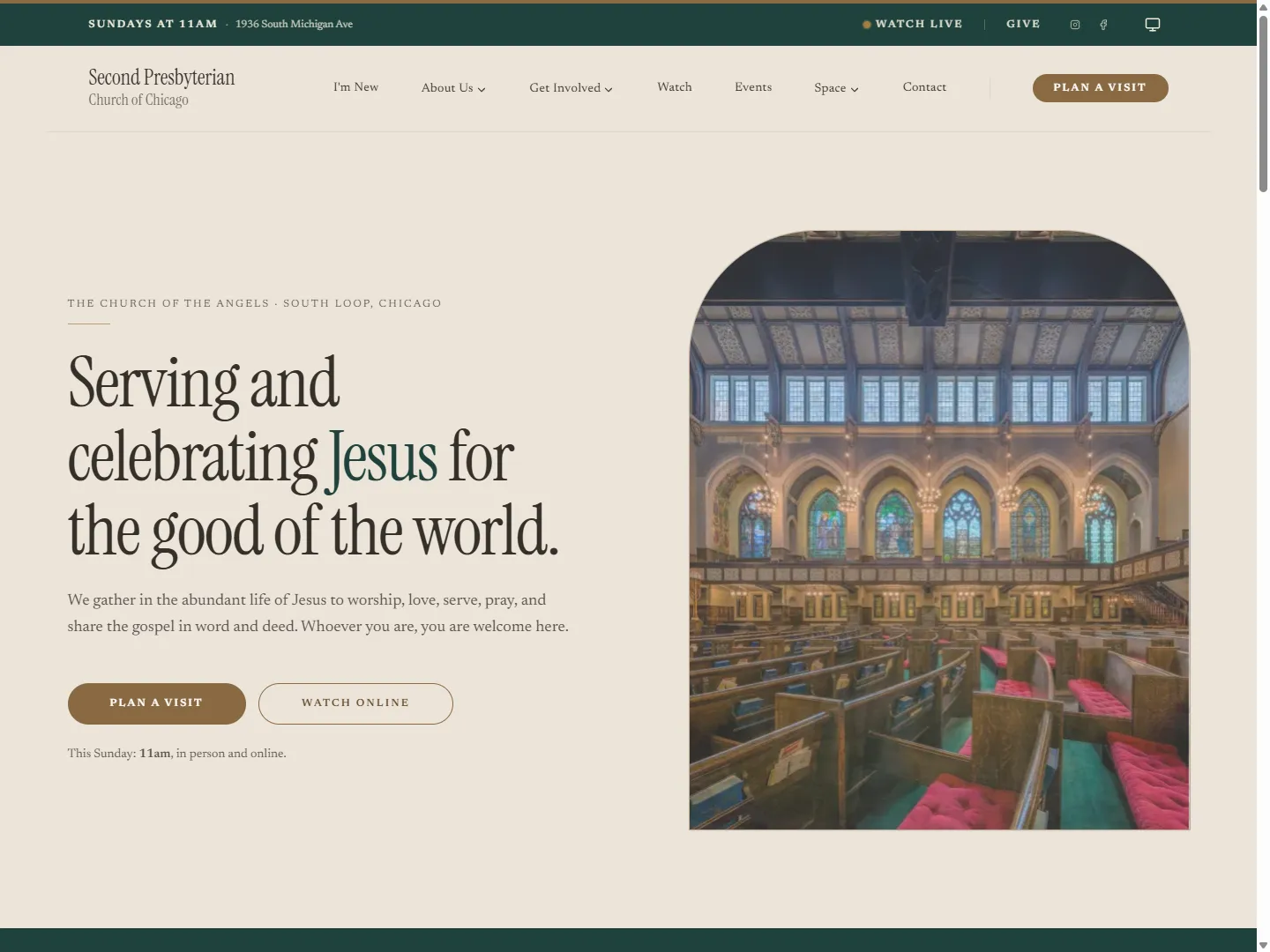
Second Presbyterian Church of Chicago is a historic congregation in the city’s South Loop, worshiping in a National Historic Landmark known as the Church of the Angels for the painted angels across its Arts and Crafts ceiling and its nine Tiffany windows. The programming runs as deep as the building’s history, and Sunday morning draws a mix of longtime members, neighbors, and first-time visitors trying to figure out what they are walking into. The site they came in with was working, but only for people who already knew where to look. Service times were buried. The sermon archive was hard to search. Staff updates were slow because the previous platform made small edits feel like a project.
Leadership wanted a full rebuild, not a refresh. The brief was specific: fast front door for guests, deep resource library for members, and a CMS the communications staff could actually use on a Tuesday.
BeforeAfter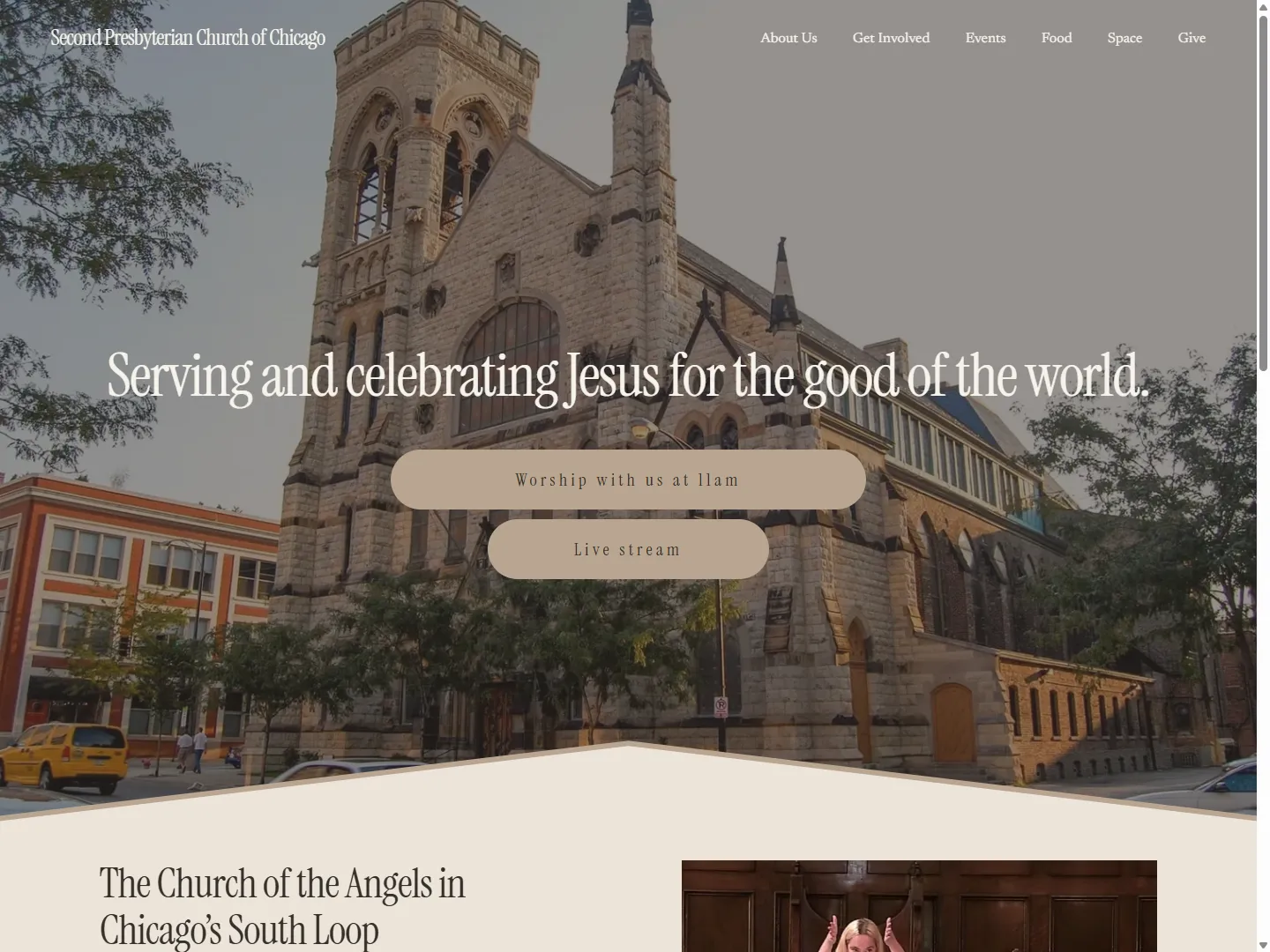
The approach
We started by mapping the two distinct audiences and where they were likely to land. First-time visitors needed a short path to service times, parking, and what to expect on a Sunday morning. Regular members needed to reach the sermon archive, upcoming events, and ministry sign-ups in one click. The challenge was that these two groups needed completely different experiences from the same homepage.
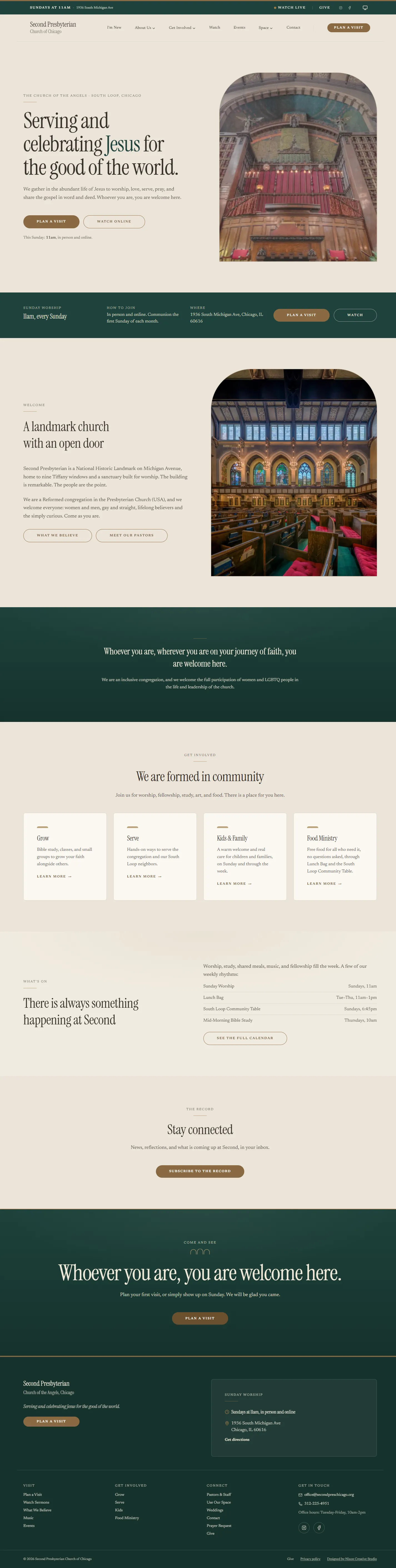
The architecture we settled on gives visitors a clear “Plan a Visit” lane that answers the four questions most of them have before they decide to show up. Everything else sits one level deeper: sermon archive, community group listings, music ministry, food outreach, weddings, and venue rental. The depth is there; it just does not crowd the front door.
For the CMS, we chose Sanity so the team could manage the sermon archive, event calendar, and staff directory without touching code. Sermons carry full liturgical metadata, including who served, which hymns were sung, the lectionary day, and links to bulletins and worship notes. That makes the archive useful for both personal spiritual reference and denominational records.
What we built
A front door built for first-time guests
Service times, what to expect on a Sunday, and how to find the building, answered up front so a guest never has to dig for the basics.
A sermon archive with real depth
Every message carries its full liturgical metadata, officiant, scripture, hymns, and a streaming link, so it serves personal study and the denominational record alike.
Deep programming, clearly organized
The week's ministries sit behind four plain doors, Grow, Serve, Kids, and Food, so members reach their next step in a click without crowding the guest path.
The full build, including the pieces above:
- Headless CMS (Sanity) for sermons, events, staff, and all content the team updates weekly
- Single-sourced worship time that populates the site header, footer, visit page, and Google structured data from one field, so a service-time change requires exactly one edit
- Sermon archive with liturgical metadata: officiant, choir, lectionary day, hymns, bulletins, and streaming links
- Events calendar covering both recurring ministry schedules and one-time events with detail pages
- Get Involved section organized around four tracks: Grow (community groups), Serve (outreach partners), Kids, and Food Ministry (the weekday Lunch Bag program and the Sunday South Loop Community Table)
- Weddings page with sanctuary history, a practical FAQ, and an inquiry workflow for couples booking the historic space
- Music page covering the quartette choir and the church’s historic Austin pipe organ in enough depth for visitors who care about sacred music
- Venue rental page for organizations wanting to use the building
- Give page connected to Vanco for online giving and designated gift categories
What changed
- Anyone on the communications team can now add a sermon or update the staff directory in a few minutes, work that used to require a developer.
- First-time visitors get a clear front door to the church's deep programming instead of a site that only worked for people who already knew where to look.
- A service-time change is now one edit that updates the header, footer, visit page, and Google's structured data at once, instead of four separate edits that drift out of sync.
- Guests now have a short, clear path to service times, parking, and what to expect on a Sunday, the basics that used to be buried.